Circadian Rhythm · Circular Ring 2
Circular Ring 2 tracks skin temperature, heart rate, HRV, and sleep timing to show how well your body clock is aligned. When your rhythm starts to drift, Kira AI turns the pattern into one clear step to help you get back on track.
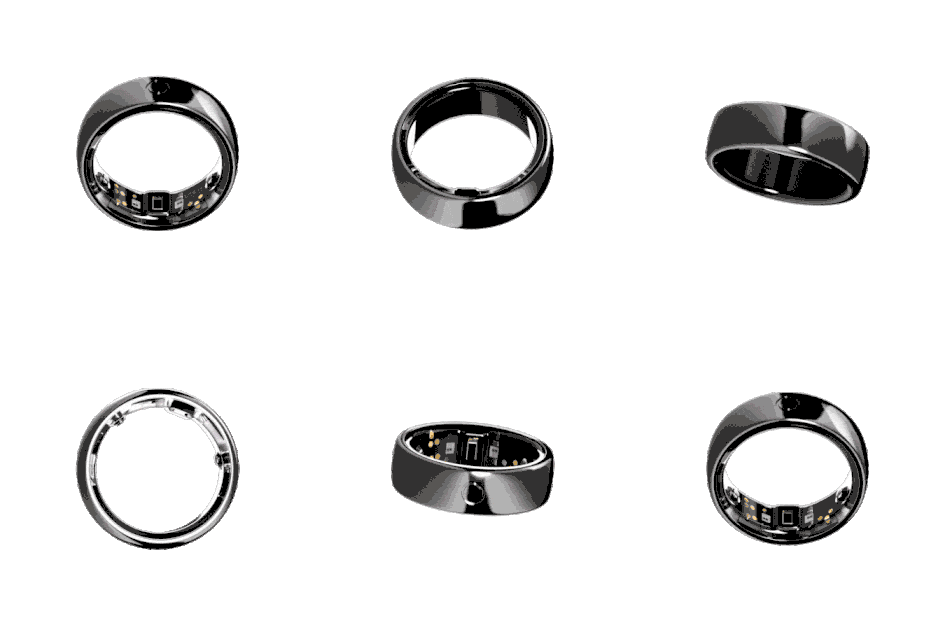
Your energy, sleep quality, hormone levels, body temperature, and mood, all of them follow a predictable daily rhythm. Most trackers show you a sleep score. Almost none of them show you whether your biological clock is running on time.
A nightly sleep score tells you how last night went. It does not tell you whether your body clock is drifting across the week, or why your Sunday nights always wreck your Monday mornings.
Going to bed and waking up at the same time every day is the single most effective way to strengthen your circadian rhythm. Most platforms do not track the consistency of your schedule, let alone flag when it is slipping.
Travel across time zones forces your body to resynchronize its entire biological clock. Most trackers register the disrupted sleep and stop there. They do not track the resynchronization in progress or tell you how to speed it up.
The Circadian rhythm is your body's internal 24-hour biological clock, governing the daily cycle of your temperature, heart rate, hormones, sleep timing, and energy levels. The ring, powered by Kira AI, reads your bedtime consistency, temperature curve, and sleep architecture together to build a picture of how well your internal clock is aligned with your environment. Later, Kira AI turns the entire data into one specific insight you can act on to bring your rhythm back into sync.
Your biological clock strengthens when you sleep and wake at consistent times. Circular tracks your sleep schedule across the week and flags when your bedtime window is drifting.
Body temperature follows a predictable daily curve tied directly to your circadian rhythm, highest in the morning, lowest at night. Continuous overnight temperature tracking shows whether your thermal rhythm is running on schedule.
Your circadian rhythm governs when your body produces deep sleep and REM sleep. Circular tracks the full architecture of your night so you can see whether the right stages are landing at the right time.
When you cross time zones, your internal clock takes days to resynchronize. Circular tracks the disruption across sleep timing, temperature, and HRV, and Kira AI gives you a specific plan to realign faster.
HRV follows a daily pattern tied to your autonomic nervous system and your circadian rhythm. When your schedule drifts or your body is under strain, the HRV pattern shifts with it.
Kira AI reads your sleep consistency, temperature curve, HRV pattern, and recovery together and writes one specific thing to do today, anchor your bedtime, get morning light, ease tonight's training, or protect your sleep window.
Circadian rhythm tracking and Kira AI's daily insights are included with your ring's 14+ core feature plan, subscription-free.
You sleep late on Saturday. Later on Sunday. By Sunday night, your body clock has shifted later and sleep onset takes forever. Monday morning is brutal. Circular shows the pattern: bedtimes scattered across the weekend. Kira AI gives you an anchor time for tonight, so your rhythm can settle again.
You flew east across several time zones. The first night was rough, as expected. But by night four, your temperature is still running high overnight, your HRV has not recovered, and sleep onset is still delayed. Kira AI gives you a reset plan: morning light, a firmer wake time, and a lighter evening.
You came home late, slept in, and expected to feel fine. But the next two nights, falling asleep at your usual time became harder. Circular shows how your sleep timing, temperature, and HRV shifted after one late night, so you can see the real cost of breaking rhythm.
For three weeks, you kept your sleep and wake times inside a tighter window. Deep sleep improved. HRV trended up. Morning energy felt steadier. Circular makes the connection visible, so consistency stops feeling boring and starts looking like recovery.
Your schedule changes, and your body never fully settles into one rhythm. Circular tracks your sleep timing, temperature, HRV, and recovery against your own baseline. Kira AI spots the nights where disruption is highest and suggests practical changes like light timing, meal timing, and a stronger pre-sleep routine.
You wake at 5am every day, even when you want to sleep longer. Your temperature and sleep timing show that your body clock is set early. Circular helps you understand your rhythm, so you stop fighting your body and start planning around it.
Kira AI
Your biological clock does not send you a notification when it starts drifting. It just quietly costs you your sleep quality, your morning energy, and your recovery, until the pattern becomes hard to ignore.
Kira AI reads your sleep timing consistency, your overnight temperature curve, your HRV trend, and your recovery score together, then writes one specific thing to do each day to keep your rhythm aligned.
Anchor your bedtime. Get outside in the first hour of your morning. Ease tonight's training. Protect your sleep window before the trip.
The recommendation is built on your data and your schedule, not generic sleep hygiene advice.
The circadian rhythm feature reads across multiple signals the ring already tracks continuously, skin temperature, heart rate, HRV, sleep timing, and sleep architecture. These signals are interpreted together to assess how well your internal biological clock is aligned with your environment.
Your body temperature follows a predictable daily curve tied directly to your circadian rhythm. It is highest in the morning and lowest at night, which is why a cooling body is one of the signals that promotes sleep onset. Circular tracks this curve continuously and compares each night to your personal 14-day baseline. When the curve is running on schedule, sleep onset and sleep quality tend to follow.
Going to sleep and waking up at consistent times is the most direct way to strengthen the biological clock. Circular tracks your sleep window across the week and identifies when your schedule is drifting, even by an hour, before the disruption compounds.
HRV follows a daily pattern governed by your autonomic nervous system and closely linked to your circadian rhythm. When your schedule is consistent and your body is well-recovered, HRV tends to follow a predictable overnight pattern. Disruption to your circadian rhythm, from travel, late nights, or irregular schedules, shows up in the HRV trend before it shows up in how you feel.
Crossing time zones forces your body to shift its entire circadian rhythm to a new light-darkness cycle. The process typically takes one day per time zone crossed. Circular tracks the resynchronization across sleep timing, temperature, and HRV, and Kira AI identifies where the disruption is largest and what adjustments will accelerate recovery.
All circadian rhythm signals are read against your personal 14-day rolling baseline, not a population average. What matters is whether your pattern is shifting from your own normal, not whether it matches a generic reference range.
Circular Ring 2 is not a medical device. Circadian rhythm tracking is a wellness feature that supports awareness of biological clock alignment. It does not diagnose circadian rhythm disorders, sleep disorders, or any clinical condition. For any medical concern, consult a doctor.
All circadian rhythm data is encrypted and processed with GDPR and HIPAA compliance.
USD$299
★★★★★
"I thought my sleep was random, but it was my schedule. Circular showed how one late weekend night pushed my whole rhythm later for days. Kira told me to anchor my wake time first, and that actually helped."
★★★★★
"Travel usually destroys my sleep for a week. This time I could see my temperature, HRV, and sleep timing slowly coming back to normal. The advice was simple: morning light, lighter evenings, same wake time. Very useful."
★★★★★
"I used to blame bad Monday mornings on stress. Circular showed my weekend sleep was shifting by almost two hours. Not glamorous advice, but going to bed closer to my weekday time made a real difference."
Circular Ring 2 is a wellness device. It does not diagnose, treat, cure or prevent any disease.
Your circadian rhythm is your body's internal 24-hour biological clock. It governs when you feel alert and when you feel sleepy, as well as the daily patterns of your body temperature, heart rate, cortisol, melatonin, and dozens of other biological processes. When your rhythm is aligned with the light-darkness cycle of your environment, your sleep, energy, and recovery all tend to work as they should.
Circular reads the physiological signals that your circadian rhythm directly controls, body temperature, heart rate, HRV, and sleep timing, continuously across the day and night. The system tracks your bedtime consistency, your overnight temperature curve, and your sleep architecture together to build a picture of how well your internal clock is aligned.
Your biological clock is anchored by the time you go to sleep and wake up. When those times are consistent, your body knows when to release melatonin, when to drop your temperature, and when to cycle through the right sleep stages. When they drift, even by an hour or two across the week, the whole rhythm shifts, and sleep quality and morning energy drop with it.
The most common causes are irregular sleep and wake times, exposure to bright artificial light in the evening, travel across time zones, shift work, late meals, and alcohol. Each of these signals to your biological clock that it is a different time of day than it actually is.
When you travel across time zones, your internal clock retains the rhythm of your origin time zone while the light-darkness cycle of your new location tells your body something different. The mismatch disrupts sleep onset, sleep architecture, temperature patterns, and HRV until your body resynchronizes, typically one day per time zone crossed.
Circular tracks the disruption to your sleep timing, temperature, and HRV after travel and Kira AI gives you specific adjustments, wake time anchoring, light exposure timing, evening wind-down, to support faster resynchronization.
Yes. Sleeping significantly later on weekends than weekdays is sometimes called social jet lag. It shifts your biological clock in the same way that traveling west does, which is why Sunday nights are often difficult and Monday mornings are harder than the rest of the week. Circular tracks this pattern and flags it when it becomes consistent.
Your body temperature follows a daily curve tied directly to your circadian clock, highest in the late morning and lowest in the early hours of sleep. A dropping body temperature is one of the primary signals that promotes sleep onset. Continuous overnight temperature tracking lets Circular read whether your thermal rhythm is running on schedule.
HRV follows a daily pattern tied to your autonomic nervous system, which is closely regulated by your circadian clock. Consistent sleep timing tends to produce more predictable and higher overnight HRV. Disruption to your rhythm, from irregular schedules, travel, or late nights, shows up in HRV before it becomes noticeable in how you feel.
Yes. Exposure to bright light, especially blue-spectrum light from screens, in the hours before bed suppresses melatonin and signals to your brain that it is still daytime. This delays sleep onset and shifts your internal clock later over time. Reducing light exposure in the hour before bed is one of the most effective adjustments for circadian alignment.
Your chronotype is your natural biological preference for sleeping and waking earlier or later, commonly described as being a morning person or an evening person. It is determined largely by genetics and shifts across your lifespan. Circular tracks your sleep timing patterns across weeks and months.
Kira AI uses a 14-day rolling baseline to calibrate to your personal patterns. After the first two weeks of consistent wear, circadian rhythm insights become reliable, and they continue to refine the longer you wear the ring.
Shift workers operate on schedules that conflict with the natural light-darkness cycle, which creates chronic circadian disruption. Circular tracks your signals against your personal baseline rather than a fixed clock, so patterns are read relative to your actual schedule.
No. Circadian rhythm insights and Kira AI's daily recommendations are included with Circular Ring 2 at no additional cost as part of the 14+ core feature plan.
No. Circular Ring 2 is not a medical device. Circadian rhythm tracking is a wellness feature that supports awareness of biological clock alignment. It does not diagnose circadian rhythm disorders or any clinical condition. For medical concerns, consult a doctor.
Yes. All data is encrypted and processed with GDPR and HIPAA compliance.

Take a reading whenever you want one. No subscription, no limit.
