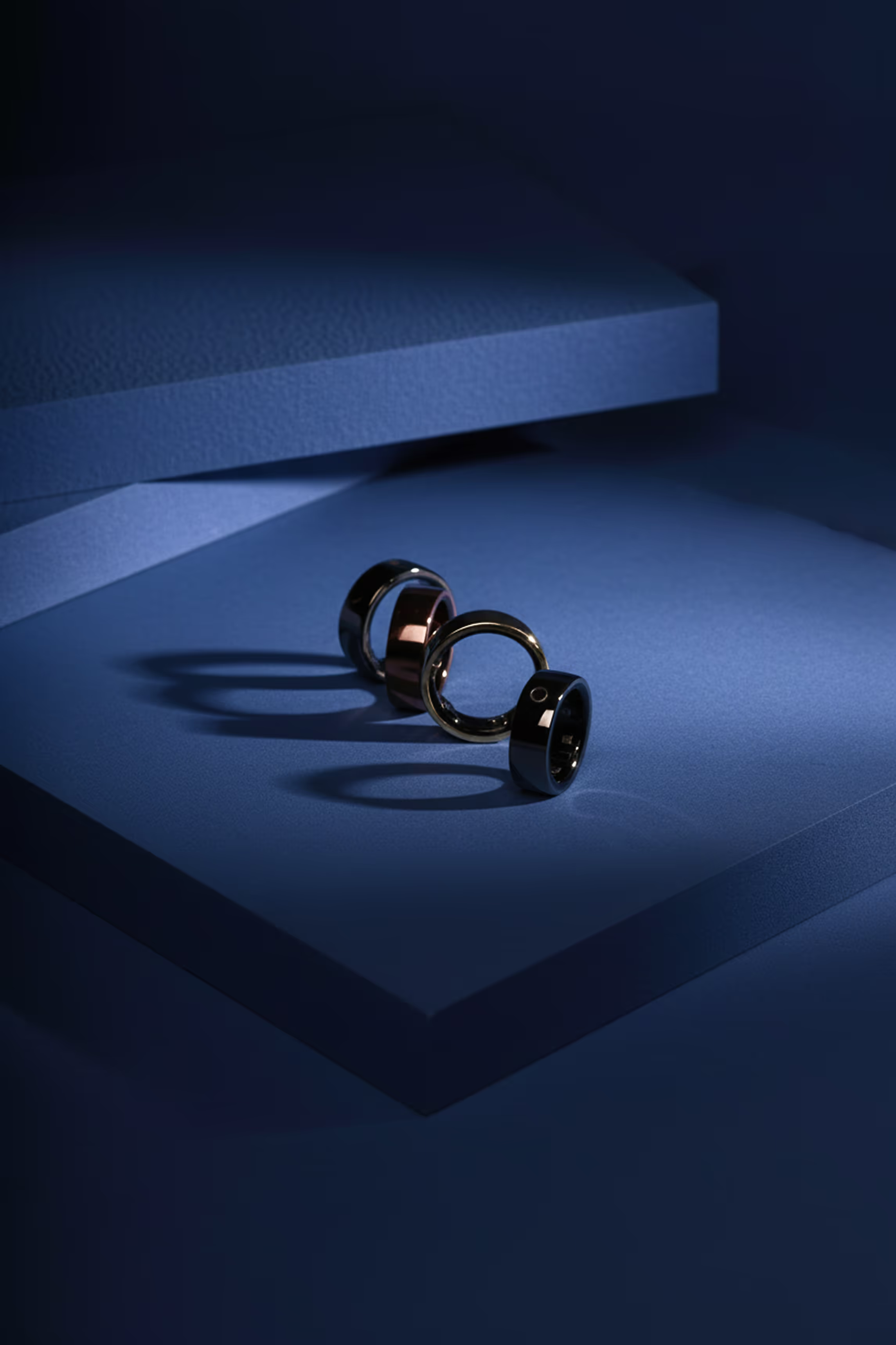
Blood Pressure · Circular Ring 2
Circular Ring 2 reads the shape of your pulse wave at your finger and tracks how your blood pressure changes over days and weeks. Enter three measurements taken at rest with a validated home or clinic cuff. These anchor the model to your own arteries rather than population averages.
After calibration with a cuff, you take a reading from your finger whenever you want one. Each one takes about a minute. You see systolic and diastolic estimates, your pulse pressure, and a 30-day trend compared with your own baseline. One reading captures a moment. Thirty days reveal a pattern.
Once a year at a check-up, in a room that already makes you tense, on a machine that gives you one number. If it is high, you are told to watch it. Watch it how? Blood pressure moves with sleep, stress, salt, alcohol and training load, and a single reading taken on a single morning cannot tell you which way yours is going.
Time of day, posture, caffeine, a rushed walk to the appointment. Any single measurement sits inside a range. A month of them is what shows direction.
Home monitors work, and almost nobody uses one daily. The readings that would show a pattern never get taken.
A bad sleep stretch, a heavy work period, a training block. Each one moves your numbers. Without a record, you cannot see which one did it.
Calibrate with three cuff readings and the ring learns the relationship between your pulse wave and your own arteries. After that you take a reading from your finger in about a minute, with no strap and nothing to inflate. Each reading gives you a systolic and diastolic estimate, pulse pressure, days in target across the month, and a baseline classification taken from whichever of the two numbers sits higher. Read it next to your sleep, stress, HRV and activity, and the question stops being "what is my blood pressure" and becomes "what is causing it".
Your 30-day chart shows the systolic estimate against your target, how many days landed in range, and where the higher baselines clustered. Patterns show up that a yearly reading cannot.
130 over 71 is Elevated, not normal. The baseline comes from the worse of the two numbers, so a good diastolic never rescues a raised systolic.
The gap between systolic and diastolic. It moves with arterial stiffness over years rather than days, and it is shown alongside the two headline numbers.
The estimate is anchored to your own cuff readings, not a population average. The app asks for a fresh anchor periodically and whenever your resting physiology shifts.
A reading taken with a poor signal is shown as missing, not filled in with an estimate of an estimate. You can trust what is on the chart because nothing was invented to complete it.
Blood pressure trends, the 30-day view, pulse pressure and the PDF export are included with your ring's 14+ core feature plan.
Your reading at the GP has been borderline for two years running. At home you have no idea. You calibrate the ring, take a reading most days for a month, and the chart shows 21 of 30 days in target with your evenings running higher than your mornings. You take the PDF to the next appointment. The conversation is about a pattern instead of one anxious measurement.
Days 11 to 15 you ran a heavy block. Your systolic estimate climbed through the week and your days in target dropped. You taper, and over the following fortnight it settles below where it started. You now know what a hard block does to you, and how long it takes to come back.
Three weeks of late finishes. You take a reading each morning and another after dinner. The mornings look normal, the evenings creep up, and the pattern holds for the whole stretch. Not an emergency, but a direction. You move your hard sessions to lunchtime and cut the late-night salt-heavy dinners. The evening creep flattens.
You changed your sleep schedule in January. By March your systolic average has come down a few points and your days in target have gone from 18 to 26. Months, not days, and invisible without a record to compare against.
You take a reading when you wake and another an hour or two later, and the second sits higher. Ordinary in most people. You watch how steep that gap is across a month, note it alongside your sleep quality, and raise it at your next appointment rather than guessing from one reading.
Both parents on medication by 55. You have no symptoms and no interest in waiting for a diagnosis to start paying attention. A month of estimates, a baseline you can name, and a record that grows a minute at a time.
An estimate on its own is a number. Read next to your ECG and heart rhythm, your HRV, your resting heart rate, your sleep stages, your stress balance and your training load, it becomes something you can act on. Circular Ring 2 reads all signals together, which is why the trend matters: it sits inside the full cardiovascular picture rather than in a silo.
Kira AI
An upward drift can be several things: a heavy training block, a run of short nights, a stressful stretch at work, or a change worth raising with a clinician. Kira AI reads your blood pressure trend alongside your sleep, HRV, resting heart rate, stress balance and activity load, and gives you one clear thing to do today. Kira describes patterns in your own data. She does not diagnose and she does not give medical advice.
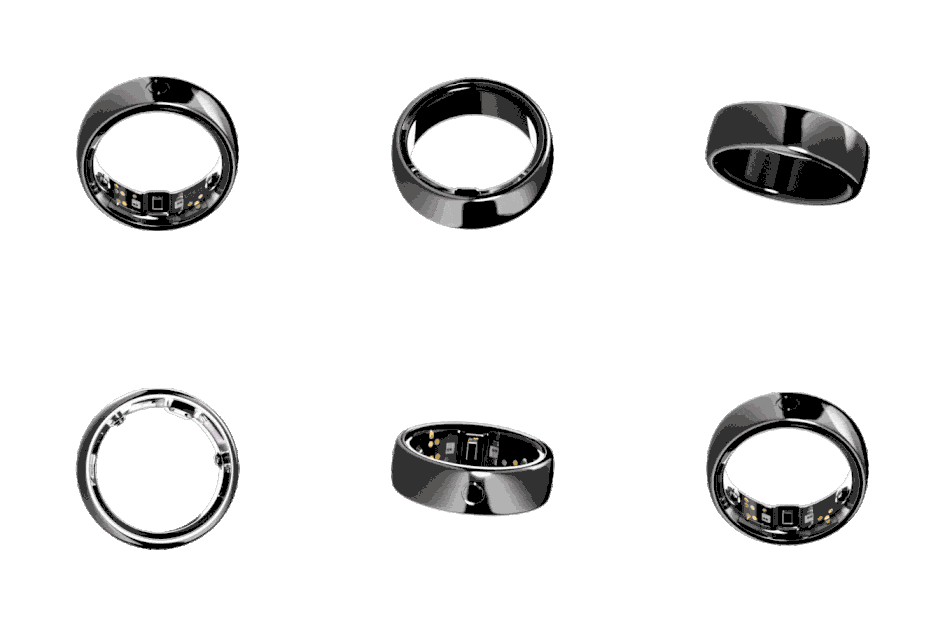
You start a reading in the app and rest a finger from your opposite hand on the ring, which closes the circuit the ring needs. Over about a minute it reads the shape of your pulse wave at the finger, along with transit timing and heart rate. Those signals are fitted against your own cuff readings to produce a systolic and diastolic estimate. The ring does not take readings on its own, so your record is built from the readings you choose to take.
You enter three measurements from a validated home or clinic cuff, taken at rest. Those anchors tie the model to your own arteries rather than an average pair of them. Without them there is nothing real for the estimate to stand on.
The app asks for a fresh cuff reading periodically, and whenever your resting physiology shifts enough that the fit is worth checking.
Systolic estimate, diastolic estimate, pulse pressure and resting heart rate, plus a 30-day chart, a systolic and diastolic average, and days in target.
Optimal, below 120 / 80. Normal, 120 to 129 / 80 to 84. Elevated, 130 to 139 / 85 to 89. Stage 1, 140 to 159 / 90 to 99. Stage 2, 160 to 179 / 100 to 109. Stage 3, 180+ / 110+. Baseline definitions follow thresholds in common clinical use. The app shows your baseline; it does not interpret it for you.
A good diastolic does not rescue a raised systolic. The baseline is taken from whichever number sits higher.
Loose fit, cold fingers, poor circulation or heavy movement reduce signal quality. A reading with poor signal is shown as missing rather than estimated.
The morning surge, the evening creep, the training block, and the slow decline. Four shapes that only become visible with a month of readings behind them.
The whole record leaves as a PDF, with your calibration dates attached so it can be read properly.
Circular Ring 2 is not a medical device. It does not diagnose hypertension, it does not replace a validated cuff, and it is not a basis for starting, stopping or changing medication. Diagnosis and clinical thresholds belong to a cuff and a clinician.
Blood pressure data is encrypted and processed with GDPR and HIPAA compliance.
USD$299
★★★★★
"Both my parents were on medication by 55 and my last two check-ups came back borderline. I put off buying anything for about a year because I did not want a cuff sitting on the counter reminding me. Three cuff readings to calibrate, then a minute on the app whenever I want to know. Six weeks in I have a baseline I can actually name instead of one number from a room that makes me tense."
★★★★★
"I learned my evenings run higher than my mornings, and I had been testing myself in the morning for years. That is the entire reason my home readings always looked fine. I had no idea the two halves of the day were that different for me."
★★★★★
"Moved my hard sessions from 8pm to lunchtime after watching the evening estimates climb for three weeks straight. Four weeks later my days in target went from 19 to 25. One change, nothing else."
★★★★★
"Day eleven of a heavy block. The systolic line started climbing and did not come back down through the weekend. I would have put it down to feeling tired. Tapered, and by the following fortnight it sat lower than where it started. Both directions showed up on the same chart."
★★★★★
"Three months. It does what it says. The caveat is the re-calibration nagging, which is fair enough but still a nag, and a few readings come back missing when my hands are cold."
★★★★★
"I was wrong about this. Told a colleague that blood pressure from a ring was marketing. Then she showed me the calibration step and the fact that it tells you when a night is missing instead of filling the gap in. That is not what a gimmick does."
★★★★★
"Turns out my 'two glasses, it's fine' weeks are visible. Not dramatically, a few points and a couple of days out of target, but visible. Slightly annoying that it figured that out before I was willing to."
★★★★★
"My GP has been telling me to watch it for two years. I brought a PDF with 30 days of estimates and the calibration dates on it. She read the whole thing and we talked about the pattern instead of the one reading she had just taken. First useful appointment I have had about this. She was clear it is not a cuff and I was not pretending it was."
★★★★★
"My father-in-law, 71, who has never owned a piece of technology willingly, asked me to set his up. He checks his pulse pressure more than I check anything. No monthly fee was the part that sold him."
Circular Ring 2 is a wellness device. It does not diagnose, treat, cure or prevent any disease.
Circular Ring 2 estimates it. The ring reads the shape of your pulse wave at the finger and fits it against cuff readings you provide, then tracks how that estimate moves over days and weeks. It is a trend tool, not a cuff.
No. Diagnosis, medication decisions and clinical thresholds all belong to a validated cuff and a clinician. The ring shows you direction between those appointments.
Three readings from a validated home or clinic cuff anchor the model to your own arteries rather than an average pair of them. Without that anchor the estimate has nothing real to stand on.
The app asks for a fresh cuff reading periodically, and whenever your resting physiology shifts enough that the fit is worth checking.
Any single estimate carries error. The value is in the trend: a month of estimates read against your own calibration shows whether you are drifting up or coming down. A careless calibration produces a confident-looking wrong number, which is why the app is insistent about it.
No. Every reading is one you start in the app, with a finger from your opposite hand resting on the ring, and it takes about a minute. The ring does not sample your blood pressure in the background, during the day or overnight. A reading with poor signal is shown as missing rather than filled in.
Optimal, Normal, Elevated, Stage 1, Stage 2 and Stage 3. The thresholds follow those in common clinical use, and your baseline is taken from whichever of the two numbers sits higher. The app shows the baseline; it does not interpret it for you.
Because the classification uses the worse of the two numbers. A good diastolic does not rescue a raised systolic.
The gap between your systolic and diastolic numbers. It moves with arterial stiffness over years rather than days, and most people have never seen theirs.
Yes. Your estimates sit alongside your sleep stages, so a run of short or fragmented nights is visible next to the trend rather than in a separate app.
Yes. Stress balance, HRV and resting heart rate are read alongside the blood pressure trend, which is how Kira explains a drift instead of just flagging it.
Yes. Training load is one of the clearest things you will see in a month of readings. Up while the load is on, down below where it started once you taper.
No. Blood pressure trends are included with the 14+ core features, with no subscription.
No. Circular Ring 2 is not a medical device. It does not diagnose hypertension and it is not a substitute for a cuff or for clinical advice.
Yes. The whole record exports as a PDF with your calibration dates attached, so it can be read in context.
You need the calibration readings plus enough days to see a shape. Thirty days is the point at which a direction, rather than a reading, becomes visible.
Samsung's Galaxy Watch8 also estimates blood pressure from a cuff calibration, on the wrist, with a Galaxy phone. Apple Watch Series 11 does not give you numbers at all; it looks for signs of hypertension in the background. Circular gives you the two values, pulse pressure and a 30-day trend from your finger, on iOS or Android.
Yes. All data is encrypted and processed with GDPR and HIPAA compliance.

Take a reading whenever you want one. No subscription, no limit.